Skid Structure Design for Oil & Gas Packages | KHAAS
The steel base frame is the load-bearing core of an oil and gas skid package. It transfers equipment, piping and handling loads to the supports while controlling movement at machinery and process interfaces.
KHAAS Design & Engineering provides skid structure design, analysis and detailing for process packages. Our approach connects the global frame assessment with practical connection, lifting-point and foundation-interface details.
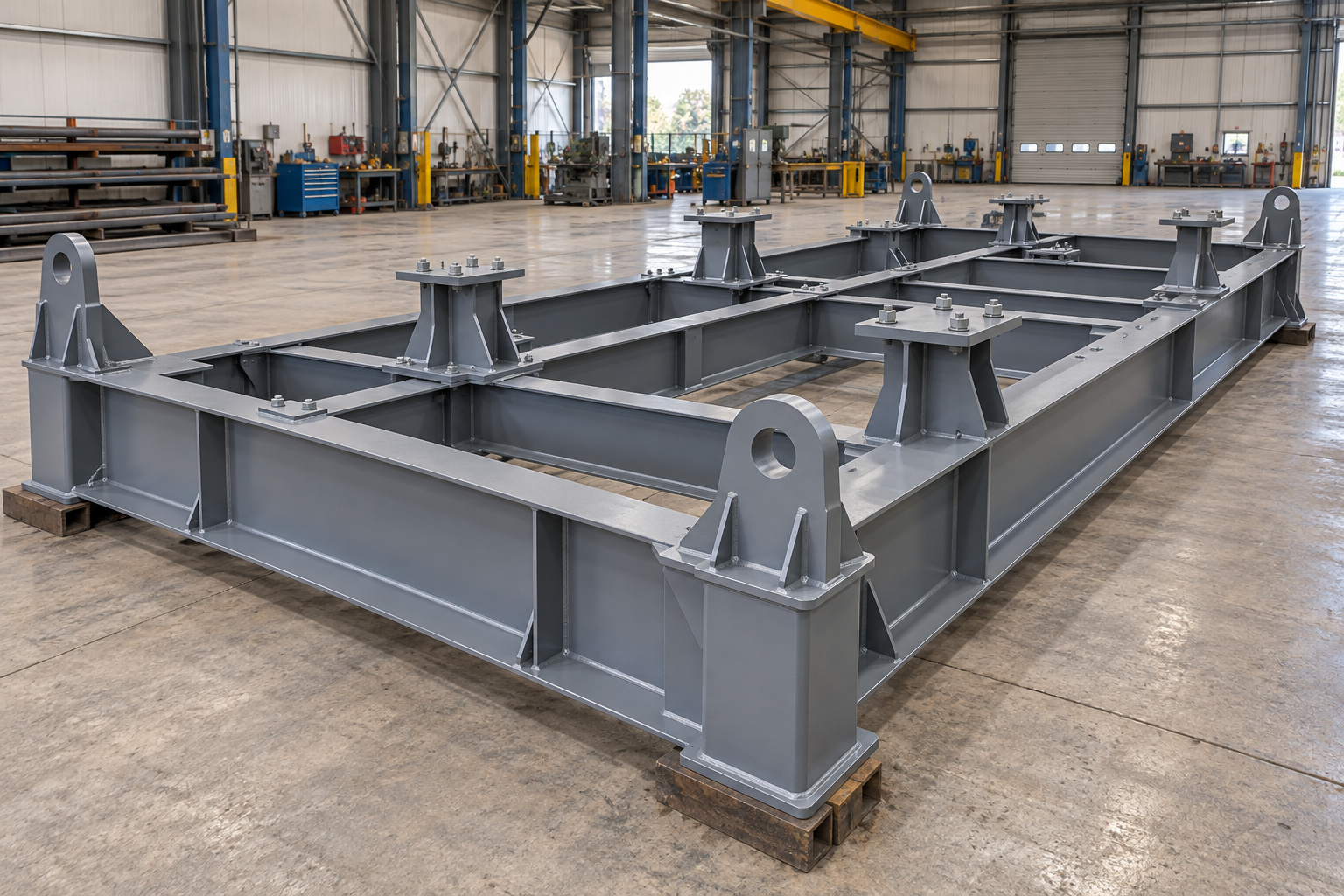
What does skid structure design include?
Skid structure design covers longitudinal beams, cross members, equipment stools, bracing, connection plates, lifting points and anchorage. Their arrangement must provide a clear load path without obstructing piping, maintenance or fabrication access.
The right frame is not simply the lightest frame. Strength, stiffness, stability, transport size, fabrication practicality and project requirements all influence the final configuration.
Base-frame analysis methodology
Confirm equipment weights, support locations, center of gravity and piping reactions.
Establish material properties, adopted structural code and project deflection limits.
Model the frame with representative support and connection behavior.
Check the agreed operating, test, environmental, lifting and transport cases.
Design critical joints, lifting points and anchor interfaces.
Coordinate calculations with fabrication drawings and vendor review comments.
Strength, stiffness and local details
Member strength checks should be accompanied by stability and deflection checks. Concentrated loads may require local assessment of beam webs, flanges, bearing areas and stiffeners.
Connection details must transfer the analysis forces into adjacent members. Weld access, bolt installation, tolerances and protective coating requirements should be resolved before fabrication.
Lifting and transport design
Lifting changes the frame’s support points and may reverse member forces. The analysis needs an agreed lifting arrangement, sling geometry, dynamic allowance and center-of-gravity assumptions.
Transport design considers the specified accelerations, support spacing and restraint arrangement. Temporary braces or transport supports should be identified clearly so the fabricator and logistics team can implement the intended condition.
Oil and gas package applications
Structural frames support pump packages, chemical injection skids, metering systems, filtration units and compressor packages.
Machinery packages may require tighter stiffness or vibration criteria than static equipment skids. The assessment must use the equipment supplier’s data and the project acceptance criteria.
Fabrication and foundation deliverables
Structural analysis report with governing load cases.
General arrangement and member schedules.
Connection, stiffener and equipment-support details.
Lifting-point and temporary restraint details within scope.
Anchor layout and support reactions.
Material take-off and technical query responses.
Coordinate interface loads with the plant foundation designer before finalizing anchorage.
Skid frame design FAQs
Does a stronger beam always solve a deflection issue?
No. Support spacing, connection stiffness, cross-member arrangement and load position also influence movement. Review the complete load path before choosing a modification.
Can lifting points be added after the frame is designed?
They require engineering review. New lifting points change reactions and may require local reinforcement or a revised handling arrangement.
Inputs for a skid structure quotation
Provide the equipment layout, weights and centers of gravity, support and nozzle loads, site data, lifting method, transport constraints and required drawing scope. For modifications, share as-built drawings and inspection information.
Discuss your skid base-frame design
Contact KHAAS Design & Engineering for project-specific structural design support.
Phone: +91 95511 44115
Email: inquiries@khaas-group.com