Pipe Stress Analysis Services for Global Projects | KHAAS
KHAAS Design & Engineering provides pipe stress analysis services for EPC contractors, equipment manufacturers, skid package suppliers and industrial project teams. Based in Chennai, India, we support projects worldwide with piping flexibility analysis, equipment nozzle load checks, pipe support loads and coordinated engineering reports.
Our scope covers process piping and skid-mounted piping for oil and gas, petrochemical, power and water treatment applications. We use CAESAR II within the agreed project scope to evaluate piping behaviour and develop practical recommendations for routing, restraints and equipment interfaces.
What Is Pipe Stress Analysis?
Pipe stress analysis evaluates how a piping system responds to weight, pressure, temperature changes, imposed movements and specified occasional or dynamic loads. It checks calculated stresses against the applicable design criteria and assesses displacement, support reactions and equipment interface loads.
The objective is to identify overstressed locations and unsuitable restraint arrangements early, so the piping, structural and equipment teams can resolve them before fabrication or installation. Explore our pipe stress analysis engineering services for project support.
When Is Piping Stress Analysis Required?
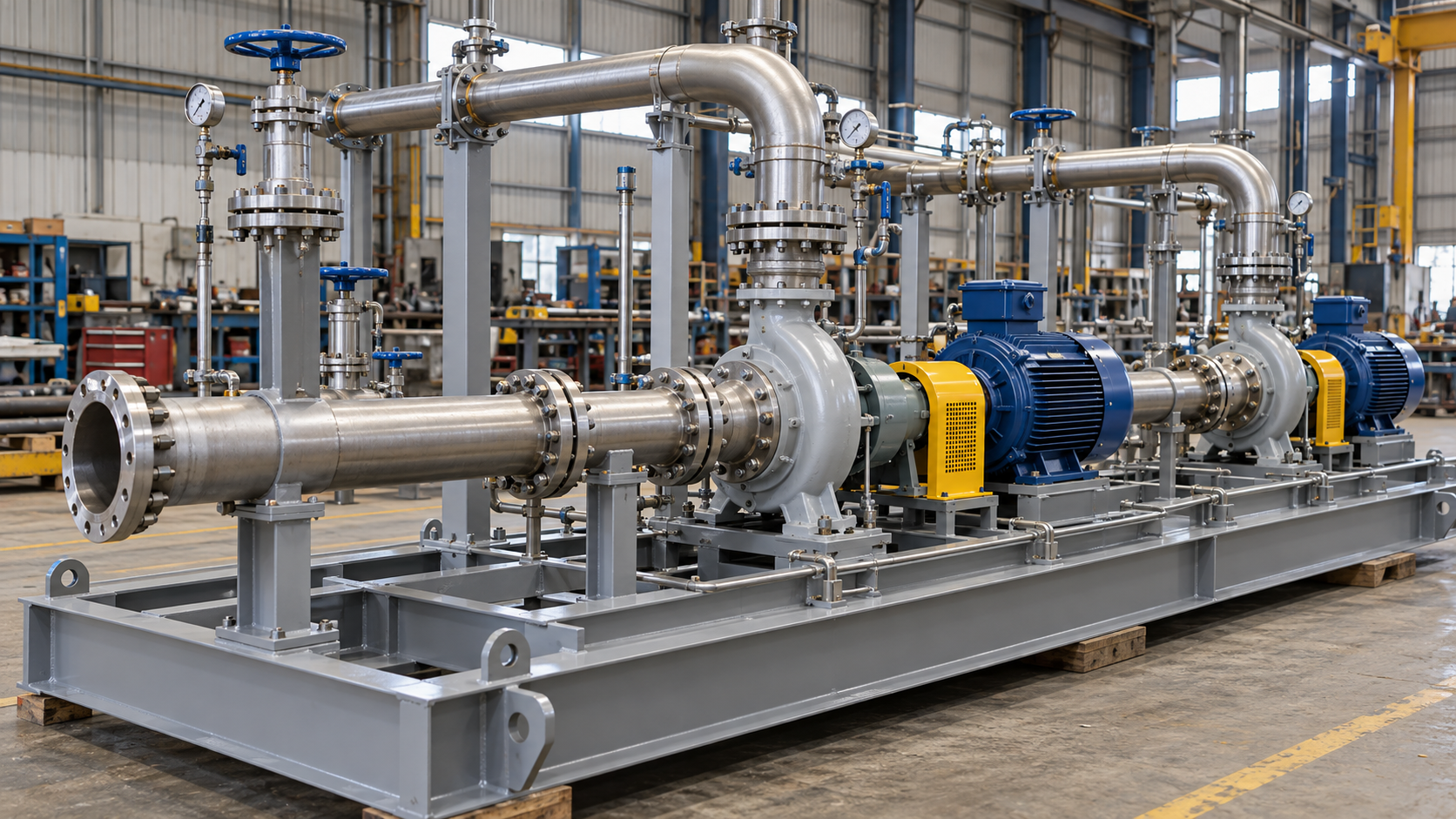
The need and level of analysis depend on the governing piping code, line criticality and project specifications. A detailed review is particularly relevant for:
High-temperature lines with significant thermal expansion.
Piping connected to pumps, compressors, turbines, vessels or heat exchangers with defined nozzle limits.
Long runs, complex routing, heavy valves or large unsupported spans.
Skid piping with restricted space, structural movement or transport interfaces.
Systems subject to specified wind, seismic, relief reaction, pulsation or transient loads.
Brownfield modifications that change routing, supports or operating conditions.
Early analysis helps teams address excessive movement, high support reactions and equipment interface loads. It supports reliable design decisions but does not replace material selection, fabrication quality, inspection or operating controls.
Pipe Stress Analysis Scope and Key Checks
Thermal Expansion and Piping Flexibility
Review thermal movements and displacement stress ranges for the specified operating scenarios. Assess routing flexibility, anchors, guides, line stops, support gaps and friction assumptions.
Weight, Pressure and Occasional Loads
Account for pipe, contents, insulation and component weights. Establish sustained, operating, expansion, test and occasional cases as applicable to the project. Wind, seismic and other specified events require appropriate input data and load combinations.
Equipment Nozzle Loads
Compare calculated interface forces and moments with approved vendor limits or the applicable equipment assessment method. Coordinate any exceedance with the equipment supplier and piping team.
Pipe Support Loads and Structural Coordination
Issue support reactions and movement requirements for the relevant cases. Coordinate these with skid frames, pipe racks and foundations so the structural design reflects the piping analysis assumptions.
Dynamic Assessment Where Required
Vibration, pulsation, water hammer and relief events may require additional specialist assessment. The method, excitation data and responsibilities must be agreed separately; a static stress model alone does not establish dynamic adequacy.
Our Pipe Stress Analysis Methodology
1. Establish the Design Basis
Review line lists, P&IDs, piping specifications, isometrics, operating scenarios and equipment data. Confirm the governing code and edition, analysis boundaries, acceptance criteria and missing inputs.
2. Build and Check the CAESAR II Model
Model piping geometry, materials, wall thicknesses, components and restraints using approved information. Check equipment connections, support conditions and the assumptions that affect flexibility.
3. Define Load Cases
Develop the required combinations for operating conditions and code checks. Include specified support movements, test conditions and occasional events where applicable.
4. Review Stress, Movement and Interface Loads
Assess code stress results, displacements, support reactions and equipment nozzle loads. Identify governing cases and locations requiring changes.
5. Coordinate Design Improvements
Review routing changes, support relocation and restraint adjustments with the client. Reanalyse agreed revisions and communicate their effect on piping, equipment and structural interfaces.
6. Issue Checked Engineering Documents
Prepare the report, stress isometrics and load schedules within scope. Record assumptions, unresolved items and revisions so the design team can trace the analysis basis.
Applicable Piping Codes and Project Requirements
ASME B31.3 addresses process piping, while ASME B31.1 addresses power piping. The governing code, edition and additional owner requirements must be confirmed for each system. Equipment acceptance criteria and support design requirements are coordinated separately.
Software output requires engineering review. Model inputs, boundary conditions and load cases must represent the intended installation and operating conditions. See the CAESAR II load-case guidance for background on operating, sustained and expansion cases.
Typical Pipe Stress Engineering Deliverables
Design basis, input register and modelling assumptions.
CAESAR II analysis model, where included in the agreed deliverables.
Pipe stress calculation report with governing load cases and results.
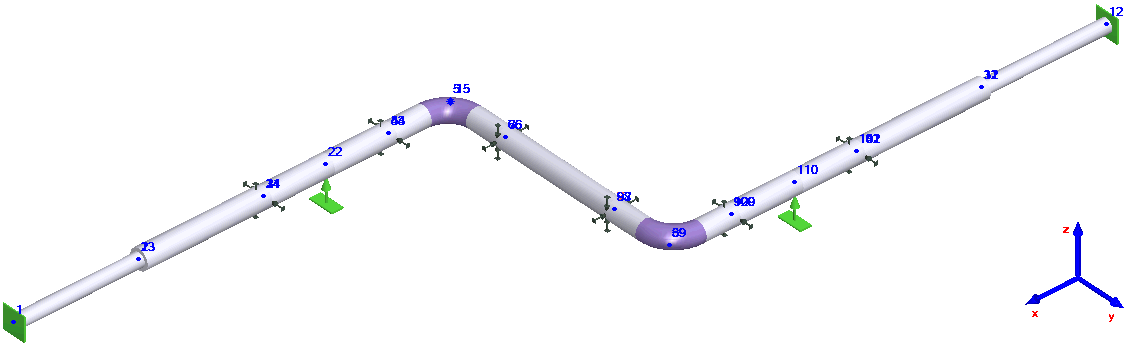
Stress isometrics showing node numbers and restraint locations.
Pipe support reaction and displacement schedules.
Equipment nozzle load comparisons within scope.
Recommendations for routing and support changes.
Comment-response records and controlled report revisions.
Information Required for a Pipe Stress Analysis Quotation
Share the line list, P&IDs, piping isometrics or 3D model, material specifications, operating and design conditions, insulation details, equipment nozzle data and available support drawings. Include project location, applicable codes, required deliverables and target schedule.
For an existing installation, provide verified as-built dimensions and support conditions. Preliminary information is welcome; we will identify outstanding inputs and confirm scope assumptions before detailed analysis.
Pipe Stress Analysis Support from India for Global Projects
KHAAS supports clients in India, the UAE, Saudi Arabia, Oman, Qatar, Singapore, the USA and other international markets. Our Chennai-based engineering team coordinates remotely with EPCs, package manufacturers and fabricators around agreed review stages and document requirements.
For package projects, piping loads and movements are coordinated with skid package design, modular skid engineering and chemical injection package skid design. This helps connect the piping assessment with the supporting steelwork and equipment layout.
Frequently Asked Questions About Pipe Stress Analysis
What is the difference between pipe stress analysis and pipe support design?
Pipe stress analysis evaluates the piping system and determines movements and restraint reactions. Support design uses those reactions, together with the relevant structural criteria, to design the supporting components. The two activities must be coordinated.
Does every line need a detailed computer model?
No. The required assessment depends on the piping code, project criteria and line characteristics. Line criticality screening helps establish which systems need detailed analysis and which may be assessed through other permitted methods.
Can KHAAS analyse piping on a skid package?
Yes. We support skid piping assessments and coordinate restraint loads with the base frame design. The scope defines operating conditions, equipment interfaces and any handling or transport assessments required.
How long does pipe stress analysis take?
The schedule depends on the number and complexity of lines, input completeness, equipment interfaces and review cycles. Share the drawings and required delivery date for a project-specific proposal.
Request a Pipe Stress Analysis Consultation
Contact KHAAS Design & Engineering to discuss your piping system, analysis requirements and engineering deliverables. Send your available drawings and project specifications for a scope review and quotation.
Phone: +91 95511 44115
Email: inquiries@khaas-group.com
Location: Chennai, India — supporting projects worldwide.